
Hope on Wheels
📍 Gudalur & Pandalur, Nilgiris District, Tamil Nadu, India
✅ Project Value: $47,382 — Reached
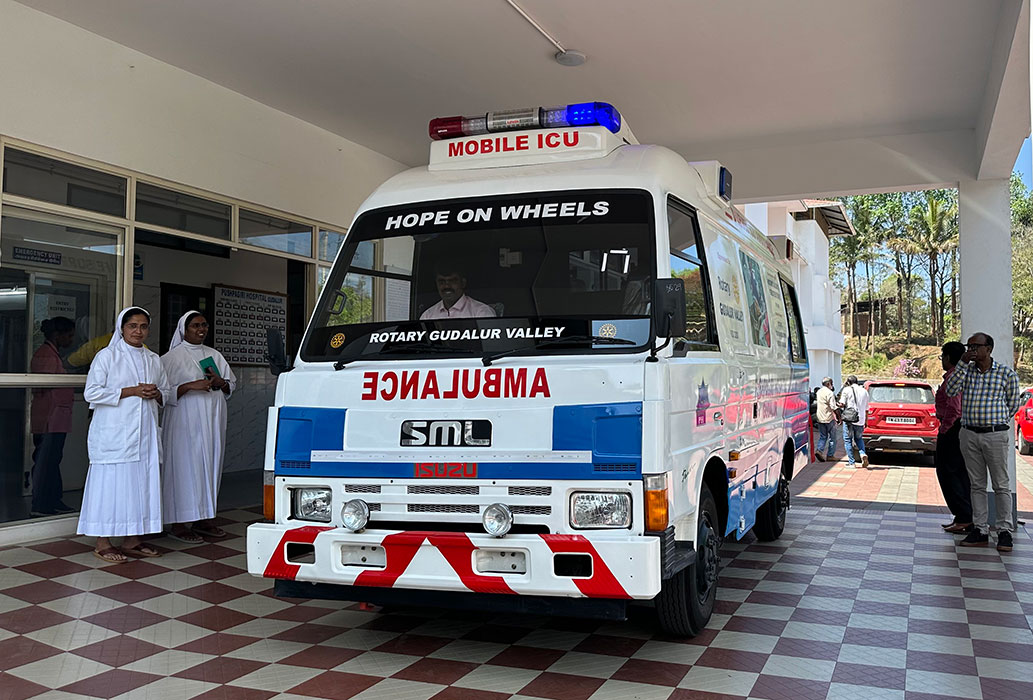
An ACLS ambulance for Gudalur, Tamil Nadu, gives 250,000+ hill residents and 20,000 tribal people a fighting chance in the Golden Hour.
When the Golden Hour runs out, a community builds a lifeline on wheels.
In the Nilgiris hills, help is measured in hours, not minutes.
Gudalur and Pandalur are tea, coffee, pepper and spice country — green, remote, and ringed by reserve forest. It's also home to around 20,000 indigenous tribal people and a much larger farming community who, until now, faced a brutal arithmetic whenever a medical emergency struck: the nearest hospital equipped to save a life was three to six hours away.
For a cardiac arrest, a stroke, a mother in obstetric distress, or a child hurt in one of the region's frequent human–wildlife conflicts, that is not a delay. It is often the difference between life and death.
Impact snapshot
- US$47,382 total project investment
- 1 Advanced Cardiac Life Support (ACLS) ambulance — a "Mobile ICU" on wheels
- 250,000–300,000 residents of Gudalur and Pandalur taluks now within reach of critical care transport
- 20,000 indigenous tribal people directly benefiting
- 3 to 6 hours — the journey to the nearest tertiary hospital that families were making in an unequipped vehicle
- Operated on a break-even, non-profit basis by Pushpagiri Hospital, so cost is never the reason a family is turned away
A region cut off from the Golden Hour
Gudalur and Pandalur sit in Tamil Nadu's Nilgiris District, but geography has never respected that state line. The closest major hospitals aren't necessarily in Tamil Nadu at all — they're in Coimbatore, in Calicut and Perinthalmanna across the border in Kerala, or in Mysore in Karnataka.
A local assessment carried out between April and December 2022 — bringing together doctors from the Indian Medical Association, ambulance drivers, Panchayath leaders and the local Member of Legislative Assembly — surfaced three compounding problems: every ambulance available in and around Gudalur was a Basic Life Support vehicle with no ICU, ventilator, or trauma stabilisation equipment; Tamil Nadu's government-run 108 ambulance service can't cross into neighbouring Kerala even when the nearest tertiary hospital is minutes away there; and even where a vehicle was available, it usually arrived without a trained paramedic.
The solution: an ACLS "Mobile ICU" for the hills
The Rotary Club of Gudalur Valley, sponsored internationally by the E-Club of Greater Sydney, set out to close that gap with Global Grant GG2348107: a purpose-built Advanced Cardiac Life Support (ACLS) ambulance, fabricated and equipped to function as a mobile intensive care unit rather than simply a vehicle with a stretcher in the back.
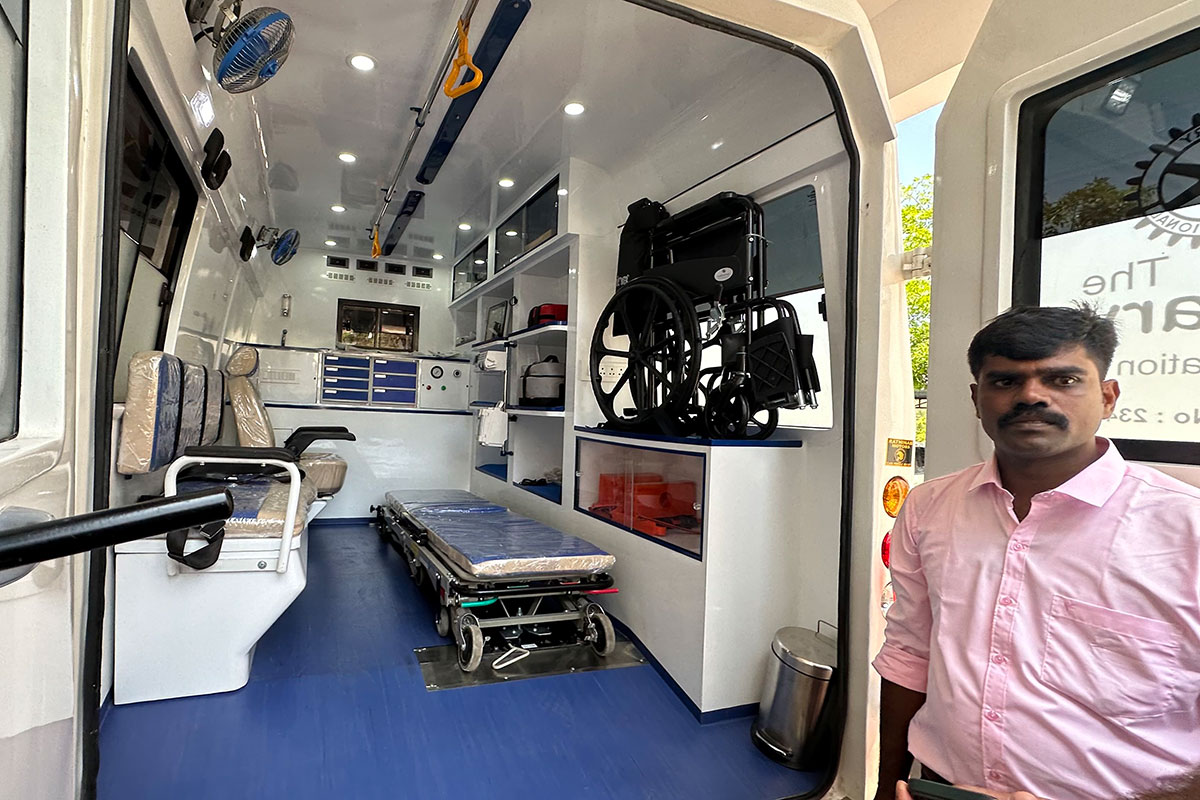
The ambulance carries:
- A defibrillator, for cardiac arrest and arrhythmia
- A ventilator, for patients who cannot breathe unassisted
- Air-conditioned transport, to stabilise patients over long hill routes
- A scoop stretcher and spine board, for safe trauma extraction
- A neck immobiliser, for accident and human–wildlife conflict victims
- Suction apparatus and a syringe/infusion pump, for continuous emergency care en route
Care that follows the patient, not just transports them
Doctors in Gudalur told the project team that they had been referring almost every critically ill or trauma patient onward, not because the patient couldn't be treated locally, but because a Basic Life Support ambulance couldn't be trusted to keep them stable for a multi-hour transfer. With a trained paramedic and full life-support equipment on board, doctors can now admit and stabilise higher-risk patients locally.
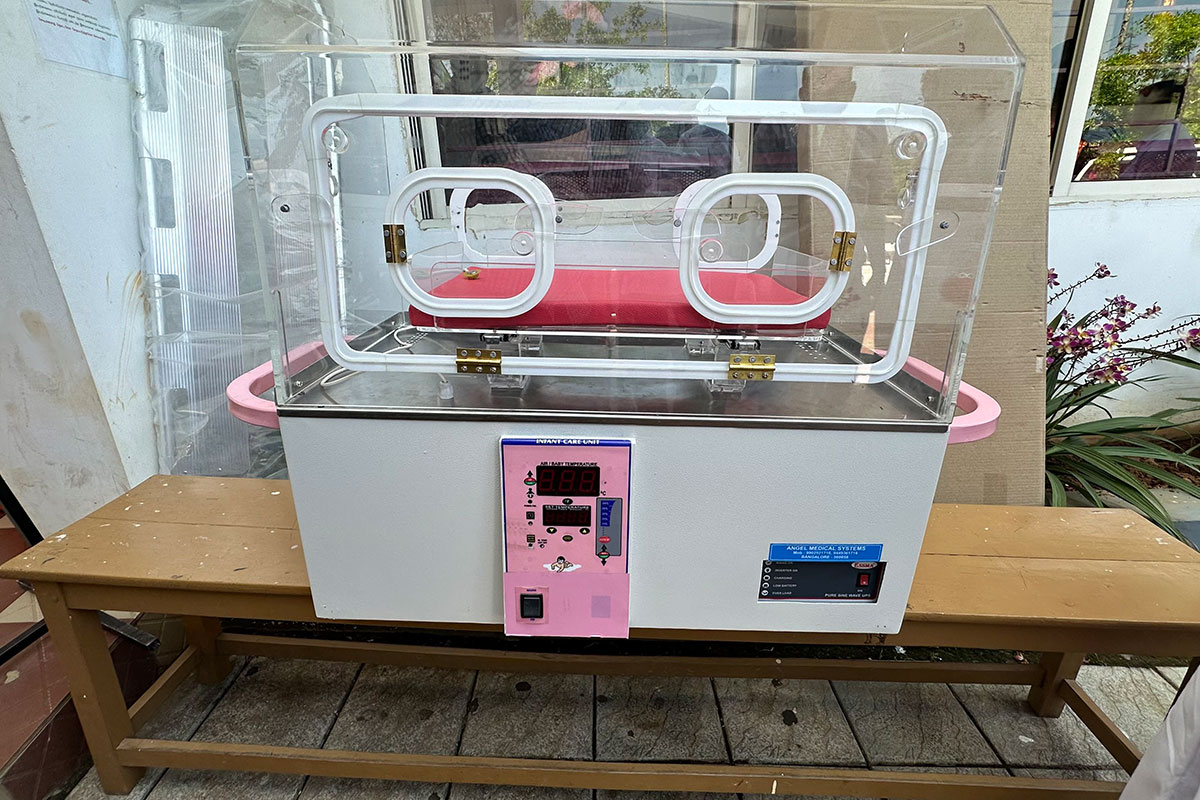
For pregnant women facing complications and for newborns who arrive on the road rather than in a delivery room, the ambulance's neonatal-ready equipment — radiant warmers, resuscitation systems, phototherapy devices — can be the difference between a frightening journey and a fatal one.
Built to outlast the grant
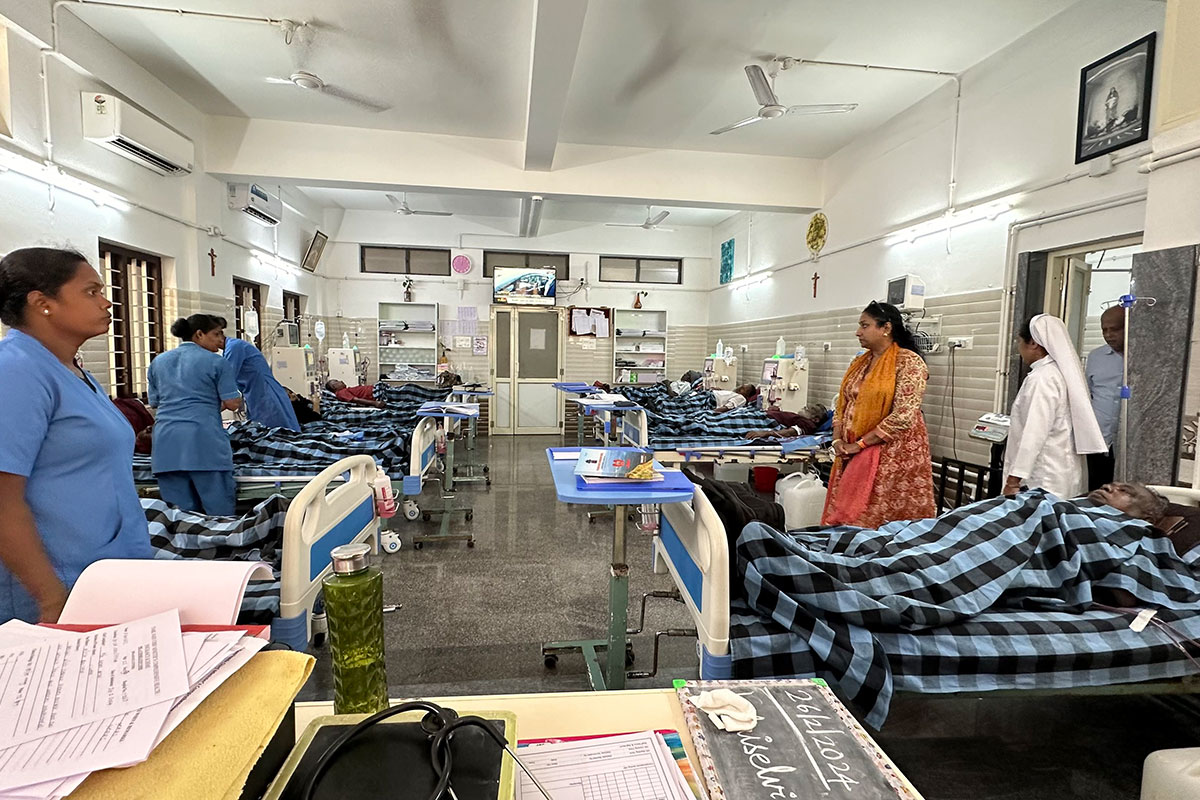
Pushpagiri Hospital, a not-for-profit institution run by Christian missionaries for more than 30 years and recognised by the Tamil Nadu Government as an "Institution of Excellence" for its care during the Covid-19 pandemic, now owns and operates the vehicle. Pushpagiri provides the trained paramedic, driver and doctor when required, maintains the vehicle, and sources replacement parts locally. Running costs are covered by charging patients a minimal, break-even fee — enough to keep the service alive, never so much that it turns anyone away.
A project built on the ground, not from a distance
Every element of this project traces back to the people who would actually use it. The community assessment brought together doctors from the Indian Medical Association, ambulance drivers, Panchayath leaders and the local MLA. Funding brought together District Designated Funds from both District 3203 (host) and District 9685 (international), cash contributions from Rotary clubs in Avanashi and Tirupur Metal Town, and a matching contribution from The Rotary Foundation's World Fund — turning roughly US$33,000 raised locally and internationally into a US$47,382 project.
Gudalur's story is a reminder that access to emergency care isn't only a hospital problem — it's a geography problem, a jurisdiction problem, and a training problem. A single ACLS ambulance can't fix all of that. But it can make sure that a farmer caught in a wildlife encounter, a mother in labour, or a grandparent having a stroke gets a fighting chance at the Golden Hour their region had never been able to offer.
Project Gallery
Want to fund the next project?
Support our work through the RAWCS donation pathway.
Donate via RAWCS